




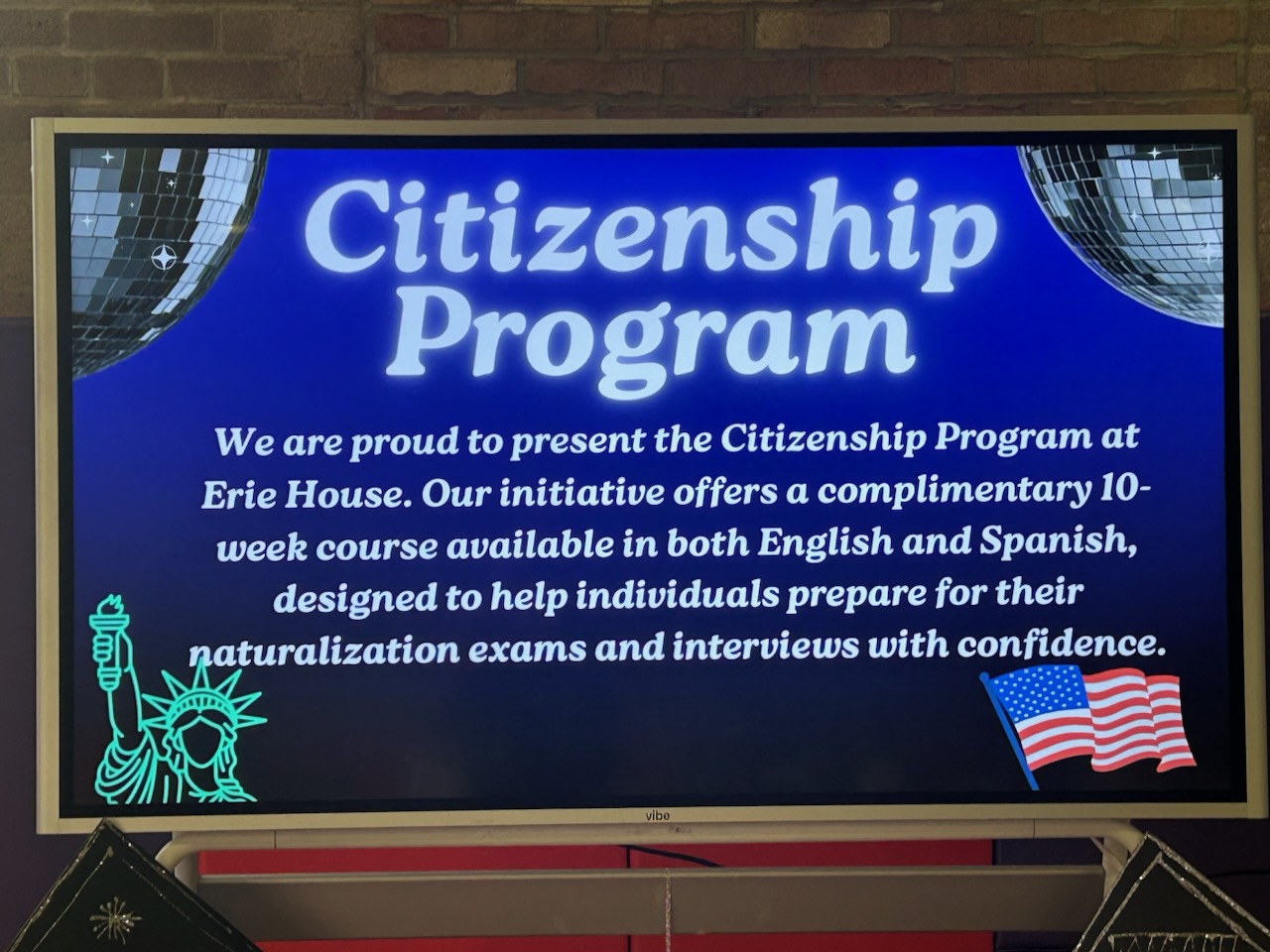
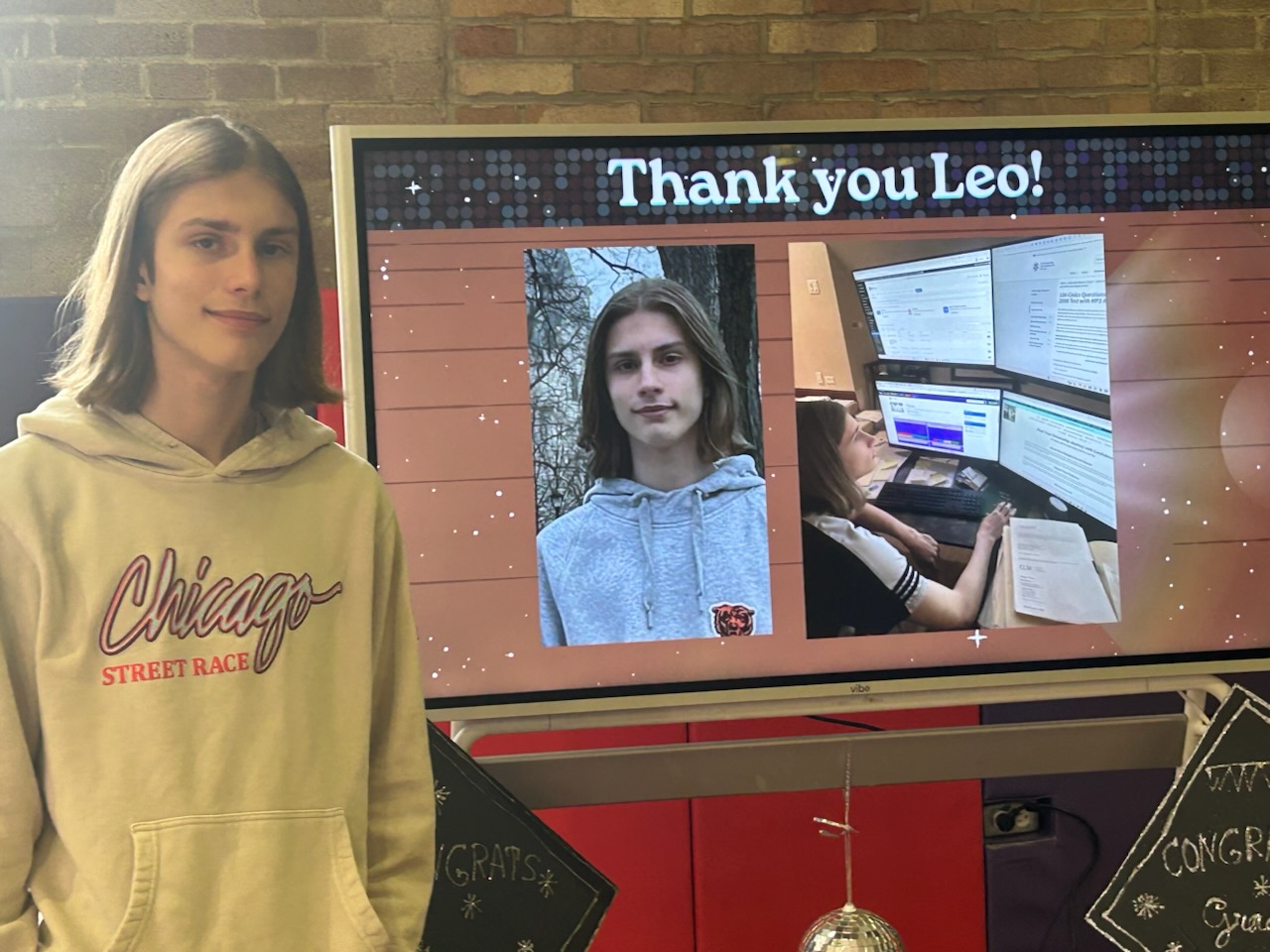
I partnered with Erie House to modernize their Citizenship Program by building a fully bilingual digital AI platform. Designed for busy learners, it combines USCIS materials, practice tests, flashcards, timelines, fun facts, and an AI tutor named Benji after Benjamin Franklin. The goal is to make studying more effective and accessible so more immigrants can pass the naturalization test, become U.S. citizens, and proudly call Chicago and the USA their forever home. It is being used by the immigrants in the program so they can have easy access to the content, fun ways to learn, so the tutors can have all the material as well, and so the Erie House can vastly expand the number of students they work with.
Check out the actual AI Bilingual Tutoring Platform!
Erie Neighborhood House August Newsletter
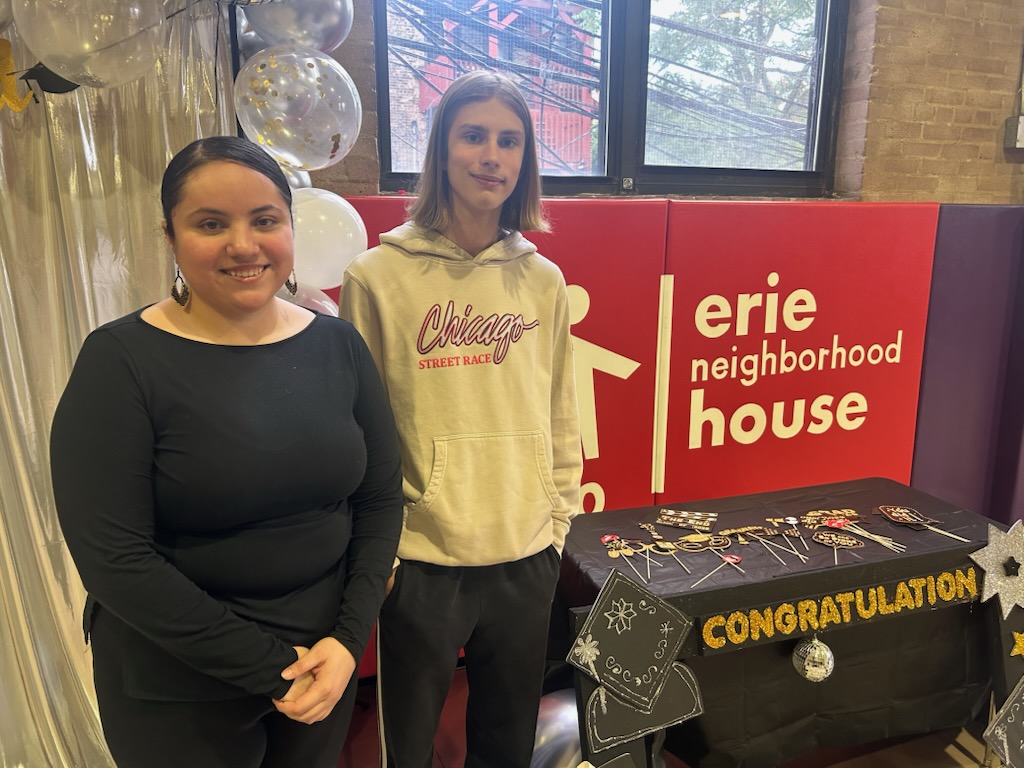
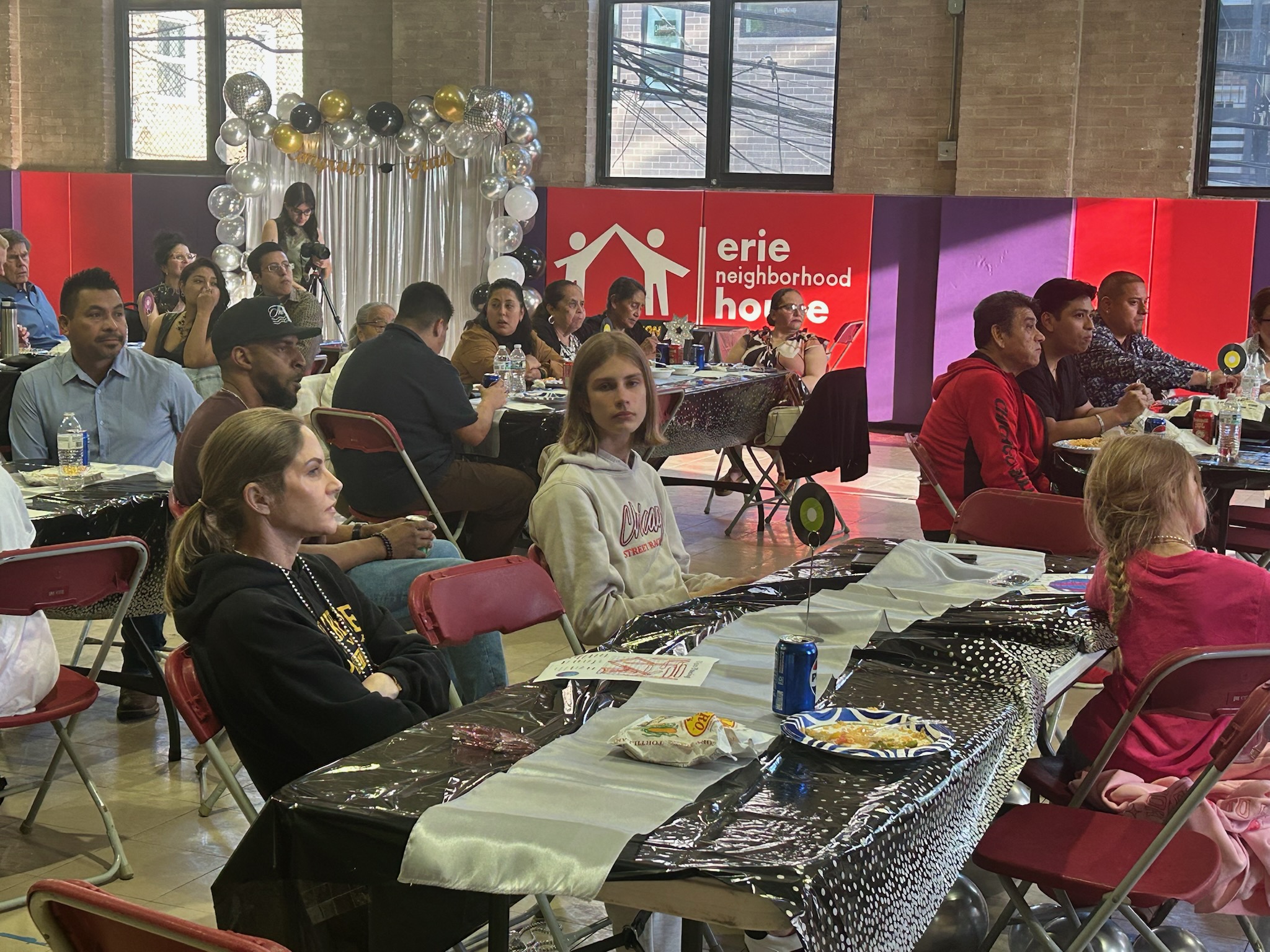
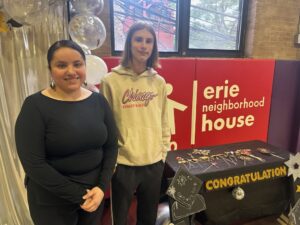
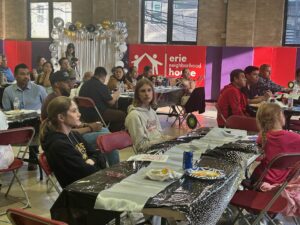
Erie House Citizenship Graduation Celebration, June 2026. Thank you for the kind words and recognition!

“UIUC has a land-grant mandate to help solve Illinois’ biggest problems. Gies has the technology and talent. Chicago has 316,000 students falling behind and 24,000 hard-working teachers who need real support. Why hasn’t someone put them together? The new school board and UIUC need to act now.”
Chicago currently faces a $10 billion paradox. Chicago Public Schools (CPS) is taxpayer-funded, and schools consume roughly 55 percent of all property taxes in Cook County, including residential and commercial properties. At an annual cost of over $30,000 per pupil against a $10.25 billion FY 2026 budget for its 316,000 students and 24,000 teachers, the district is spending more than many elite private high schools and the results are falling far short. Even with the state’s recent lowering of the proficiency bar, roughly 75 percent of students are not proficient in math and nearly 60 percent fall short in reading. This leaves our future workforce and our city in a compromised position.
Shockingly, while school districts around the country — and companies large and small — are making meaningful investments in AI to enhance outcomes and capture economic efficiencies, CPS has established guidance and governance on AI strategy but has not yet put forward a clear public strategy for the kind of ambitious, system-wide AI integration that could meaningfully change outcomes for 316,000 students or materially reduce its $10 billion annual budget.
We need to address this immediately through strategic planning and collaboration or watch our students struggle for many years to come. With every seat on the Chicago Board of Education up for election this November, the moment to force the issue is now. Getting this done right will empower students, help repair the budget, and reduce the exodus that has shrunk Chicago’s middle class from 50 percent to just 16 percent of the population.
With property taxes in Cook County roughly double the national average, Chicago cannot tax its way out of this. We must innovate.
A made-in-Illinois opportunity
The great news is that the solution is “Made-in-Illinois,” resting on the historic land-grant mission of the University of Illinois: To deploy world-class research for the public good of Illinoisans.
At UIUC, the Gies Disruption Lab’s Contextual AI Avatar project provides a state-of-the-art toolkit. Unlike ChatGPT, these avatars are trained specifically on vetted and defined internal curriculum. They are designed to stay within a closed set of district-approved materials, which sharply reduces the risk of hallucination.
By implementing this UIUC technology, CPS can significantly expand 1-on-1 support at affordable costs for every one of its 316,000 students and its 24,000 teachers with a 24/7 AI teaching assistant capable of supporting students and teachers across subjects and in multiple languages. This scales 1-on-1 support in a way that is humanly impossible and fiscally unimaginable without this type of cutting-edge technology. For the many tens of thousands of struggling students, this access could accelerate test score improvement as well as prepare them for future career opportunities.
As Executive Associate Dean of Academic Programs at UIUC, Nerissa Brown has noted in her recent publication, student expectations for technology that opens flexible learning options have accelerated the adoption of course-specific AI tools. Custom AI chatbots are now trained exclusively on instructor-approved materials and are used to provide 24/7 access to course content and instructor-approved supplemental information. These tools instantly relieve teachers from having to answer the same questions from different students.
When UIUC instructor Mandi Alt launched this AI chatbot in her course, she reported a staggering 75 percent drop in repetitive questions. That allowed her to apply that newfound time to feedback, mentoring, and deeper teaching.
The Gies infrastructure advantage
The second piece of the opportunity is the infrastructure behind it. At the University of Illinois Gies College of Business, researchers are already developing the tools Chicago could leverage.
For example: The Gies Disruption Lab has a cutting-edge system referred to as “LLM Inference.” This technology allows large language models (AI) to run on distributed, existing hardware, potentially saving tremendous money, as compared to centralized cloud clusters. For a district the size of CPS, this could represent a significant cost savings.
By running AI models on existing school servers, laptops, and local networks instead of relying on costly cloud subscriptions, CPS could dramatically cut expenses on student data processing, scheduling systems, FOIA responses, bus routing optimization, administrative reporting, and a wide variety of other areas.
This distributed approach delivers high performance at a fraction of the cost of those recurring cloud bills — often without sacrificing performance. Organizations running high-volume workloads this way routinely see two to four times lower total costs. CPS could also potentially cut technology infrastructure costs by 15–40 percent and slash cloud-API spending by more than 60 percent once the system is running at scale.
The next logical step is a focused partnership with the Gies Disruption Lab to run a real pilot, measure the actual savings on CPS hardware and systems, and then scale what works.
Even capturing a meaningful share of these efficiencies could free up tens of millions of dollars a year, and potentially more than $100 million over time, that currently go to cloud bills and administrative overhead.
This is not about replacing our valuable and dedicated teachers. It is about giving them powerful partners and additional resources so they can focus on mentorship, advancing the curriculum, relationships, social and emotional intervention, and motivation.
Three immediate steps for Chicago
Here are three crucial steps Chicago, and its newly elected school board, can take:
First, establish a dedicated CPS AI Integration Office.
This needs a clear mandate to generate savings for the express purpose of repurposing a large part of those savings into core instruction and classroom support. By aligning the savings with more support for teachers and students in the classroom, the students win.
Second, work out the details of a comprehensive civic-academic partnership with the Gies Disruption Lab.
The lab’s leadership and core of talented UIUC graduate and undergraduate students can successfully tackle a project of this scope and importance. Chicago should use the Gies Disruption Lab as its primary laboratory. This partnership between CPS and the University of Illinois perfectly honors the original historic Land-Grant mission by exporting world-class innovation to solve the state’s most critical urban challenges. What could be a better match for UIUC’s Land-Grant mandate?
Third, we need to define AI Proficiency and Ethical Standards.
To prepare our students, AI literacy should be established as part of the core curriculum alongside ELA, Math, Science, History, and Foreign Language. This includes training and daily work on AI ethics, so students understand what tools and practices to avoid and the fundamental reasons why those tools and practices need to be avoided. Students need more than rules; they need clarity.
In addition, we must also adopt Proof of Work standards, so students learn how to show their prompts and explain their reasoning. By incorporating these steps, we turn AI from a potential shortcut into a genuine skill that will give them a competitive advantage over their peers around the country. They will be in an ideal position to take advantage of the job opportunities of their generation.
The choice ahead
The current school system is plagued with costly spending from administrative as well as programmatic inefficiencies that are producing unacceptable outcomes, and continued population stagnation and decline. That can change dramatically and quickly. We already have the data. We have models that work. What we need now is the courage to make an asymmetrical bet and move from chronically falling short with our students to providing a platform for them to thrive.
With collaborative, ethical, and Made-in-Illinois AI solutions, we can turn our city’s most important investment into our greatest advantage. Every Chicago student deserves a real chance at success. This is our chance to make that a reality.
This November, Chicago voters will elect every member of the Chicago Board of Education. Every candidate must be pressed — publicly and specifically — on where they stand on integrating AI into CPS in a way that makes the district a leader among large-city school systems worldwide, with AI literacy embedded in the core curriculum. Vague support is not enough. Voters deserve clear commitments on the AI Integration Office, the UIUC/Gies partnership, and measurable classroom impact. They deserve to know which candidates are willing to test, measure, and scale new ideas that could put more of CPS’s $10 billion budget to work for Chicago’s most valuable assets, its students.
Leo Fiascone is a Chicago-area high school senior, founder of Chicago Rising, and the creator of an AI for Main Street including an AI-assisted citizenship tutoring platform at Erie Neighborhood House.
He researches and writes on urban policy, ethical AI, and practical solutions for Chicago families.

Fact: Illinois is bleeding between $28 billion and $57 billion every single year. Illinois is a massive federal “donor state” — paying billions more in federal taxes than the state receives back in federal funds. It simply does not have to be this way. Over the past decade alone, this gap has cost our taxpayers hundreds of billions of dollars. Correcting our donor state status would provide financial flexibility to fundamentally help our depleted middle class, our most vulnerable residents, and our 315,000 CPS students. Oddly, it appears no one in local leadership is even talking about it.
According to the Rockefeller Institute of Government, Illinois has consistently ranked among the nation’s biggest financial losers in its ratio of payments to Washington as compared to its receipts of federal dollars. Illinois captures roughly 80 cents back in federal outlays for every dollar sent. Compare that massive shortfall in Illinois to other high-GDP states across the country.
Texas, a traditional red state, has managed to secure a windfall return, getting back an annual $80 billion federal surplus. Virginia, a purple state, has captured an astonishing $145 billion surplus per year, which translates to over $1.30 received per dollar sent. Pennsylvania, a traditional blue state, consistently finds itself a major net recipient, hauling in a $62.8 billion annual federal surplus. Given the diverse political predisposition of these three states, politics itself doesn’t seem to be the driving factor.
This multi-billion-dollar deficit in Illinois falls heaviest on the Chicago metropolitan area, which generates roughly 80 percent of our state’s total tax revenue and economic output. City Hall has a projected $1.15 billion corporate fund deficit, driven primarily by our contractual obligations. These include personnel costs to maintain basic city services and an estimated $53 billion in unfunded legacy pension liabilities.
To be clear, the solution is not to squeeze the pay of hard-working municipal employees or cut the retirement security of workers who earned their pensions. If executed properly, they could receive even more. Rather, if our political leadership simply stopped treating the federal government as an ideological punching bag and successfully worked toward a break-even balance of payments, the extra $30 to $50 billion annually — an amount that approaches the entire State of Illinois’s annual general fund budget — would result in a transformative windfall statewide, and for Chicagoans.
Even if the federal funds were earmarked, the resulting fiscal flexibility could effortlessly wipe out Chicago’s shortfall and fully fund municipal pension systems. The flexibility could help bankroll a massive reduction in local property taxes, add universal three-year-old preschool options, and expanded summer job programs for teens. It could allow us to open additional mental health facilities and expand critical safety nets for our most vulnerable residents, while restoring public safety by putting more police officers on public transportation and completely dismantling predatory red-light and speed cameras. The credit rating of the state and city would see immediate rating agency upgrades and our borrowing costs would fall quickly. This would result in even further additional savings to reduce state and municipal taxes without making a single cut to programs.
Instead of capturing this windfall, political leadership often engages in adversarial and over-the-top rhetoric on national platforms attacking the executive branch. While this performance might win cable news ratings, create social media soundbites, raise campaign funds, and satisfy political bases during a campaign, it spills over into governing and severely damages our state’s quiet, behind-the-scenes leverage for federal funds.
Illinois is a solidly blue state politically. It’s time to realize the damaging effects of post-election hostilities and to acknowledge the financial result of that behavior is a luxury that working-class families can no longer afford. Performance politics doesn’t pay our bills.
Campaigning requires tough rhetoric and it is expected both parties will hit below the belt. That said, once in office, leaders must best position our city and state financially. Illinois and Chicago must treat the office of the presidency not as a battlefield, but as a primary financial partner. Find fiscal common ground. It is time to make our city and state better for our middle class and struggling households, not better for political campaigns that never end.
As it pertains to pending state and city elections, every candidate promises structural reform. The real test is which candidates have a plan to secure the federal funding Illinoisans have already paid for.
Leo Fiascone was born in Chicago. A high school junior, he is the founder of Chicago Rising, an independent research project focused on data-driven solutions to the “kitchen table” issues facing Chicagoans. For more on his research into urban policy, ethical AI, and economic opportunity, visit www.leofiascone.com (http://www.leofiascone.com/).

Why are we treating AI as academic dishonesty in schools when it is actually a career requirement? And why are we hesitating to encourage students to master the tools that will transform them from entry-level hires into six-figure professionals? Technological change has a long history of being misunderstood. Early skepticism often gives way to widespread adoption, and those who adapt first tend to benefit most. Consider the past: The internet was dismissed as incapable of replacing paper newspapers, personal computers were seen as unnecessary in the home. Even the automobile was once called a passing fad. Closer to home, many believed machine learning and electronic platforms would never replace the trading floors of the Chicago exchanges. These were not fringe opinions. They were widely held beliefs.
We have been here before. The risk for schools is not that artificial intelligence moves too fast. It is that we respond too slowly. Treating AI as a threat rather than a tool is not caution. It is surrender.
We are told AI will define our future, yet in classrooms today, using it is often treated as academic dishonesty with consequences. You cannot prepare our generation for a fire drill by telling us we are not allowed to use water.
The consequences of this “confidently wrong” approach are already here. At Hingham High School in Massachusetts, a high-achieving student used AI for research and outlining on a history project, something many teachers encourage. The student was punished with failing grades on key sections, a drop in GPA, Saturday detention, and initial denial of National Honor Society eligibility.
In Maryland’s Broadneck High School, a student received a ‘zero’ for her grade and an academic integrity violation after GPTZero flagged her essay. After public embarrassment, the accusation was later investigated, proven false, and fully rescinded. Across the country, some students deal with false accusations, months-long investigations, or disqualified essays, as reported by ABC News and The Washington Post. There are plenty of students using AI in ways that are not appropriate, but it seems that the burden has flipped: students must now prove they didn’t cheat just to be allowed to learn.
Even in Chicago Public Schools, the plan for AI is unclear and sends a confusing message. CPS has not banned AI. Its district-wide guidebook encourages AI for idea generation and for learning. It requires student disclosure, while permitting teacher use of detection tools that the district admits can produce false positives.
CPS has created rules for AI use. It has not created a plan for AI success.
This creates a “gotcha” culture that punishes the curious and rewards the cautious.
The district has started the conversation, but it needs to finish the job. CPS needs a systemwide curriculum, a defined funding stream, and an executable plan to make sure that every student and teacher will benefit. Time is not on the students’ side.
Our future as students is shifting quickly. McKinsey reports 51 percent of organizations are already reducing entry-level hiring because of AI. Goldman Sachs estimates 300 million jobs globally exposed to disruption. The World Economic Forum notes 41 percent of employers plan workforce reductions as automation expands.
Schools cannot prepare students for 21st century careers by failing to train them in 21st century technology.
The good news is there are models that are working. At Seckinger High School in Georgia, AI is fully integrated into the curriculum. Students build models, analyze data, and study AI ethics every day.
In Newark and Niagara Falls, public school students complete Stanford University-designed programs where they learn prompt engineering and are required to earn certifications before graduation. They receive grades for their AI work, just like in other classes. Illinois districts like Indian Prairie are integrating these tools starting in third grade.
These models do not promote cheating or taking the easy way out with AI. In fact, just the opposite. They elevate work and prepare students to be productive members in the workforce of tomorrow. That is hardly cheating.
Chicago has a choice: Remain reactive, or lead.
Roughly three-quarters of Chicago students are not meeting proficiency benchmarks in math and nearly 60 percent are falling short in reading. The district is failing these students.
Intentional AI programming can help address this. Stanford University research shows structured AI tutoring can improve math performance, with gains of roughly nine percent. The Brookings Institution reports meaningful improvements in math and ELA learning when AI is implemented with clear structure and guidance.
Unstructured use may increase engagement, but not outcomes. The difference is not the technology. It is how it is used.
Chicago has a choice to prepare its students and lead. Here are four focused steps CPS can take to enact swift change.
First, establish a dedicated AI Integration Office within CPS.
This team should have a clear mission: Improve student outcomes, increase teacher productivity, and position Chicago as the nation’s leading big-city school system for AI training. Without ownership, strategy becomes suggestion. A centralized team ensures consistent implementation and accountability across schools. Beyond academic gains, AI has proven to be a reliable cost saver when implemented properly, and the CPS administrative budget will be no exception.
Second, build a clear systemwide AI curriculum with a “proof of work” standard.
Make expectations explicit. Require students to show prompts used, errors identified, improvements made, and their own reasoning. Teach AI ethics so students understand not just what is allowed, but why.
Third, invest in practical, teacher-first training.
Provide hands-on use cases, shared lesson plans, and clear grading standards. AI can free teachers from repetitive tasks so they can focus on mentorship, relationships, and early intervention. This strengthens both instruction and the profession.
Fourth, build a competitive AI ecosystem across CPS.
Partner with national programs like aiEDU and TeachAI and create citywide competitions such as AI Olympiads and hackathons. Work with Chicago’s robust private sector to offer scholarships and real incentives for student participation.
These steps reinforce what already works: quality curriculum, data-driven growth, early intervention, professional development, and time on task. AI does not replace these fundamentals. It accelerates them.
AI could be the great career disruptor, but if we find healthy ways to be early adopters in our schools, it can be the great accelerator for students, teachers, and the city of Chicago.
Now is the time to trade caution for courage. By thoughtfully integrating AI into our curriculum today, we stop reacting to the future and start clearing a high-speed lane for every student in this city.
The door is wide open. It’s time for Chicago to walk through it — our students are counting on it.
About the Author:
Leo Fiascone was born in Chicago. Now a high school junior, he is the founder of Chicago Rising, an independent research project focused on data-driven solutions to the “kitchen table” issues facing Chicagoans. His work also includes AI for Main Street, an initiative exploring how ethical, practical AI can support small businesses. For more on his research into urban policy, ethical AI, and economic opportunity, visit www.leofiascone.com.

Who will answer the call to stop the exodus from Chicago?
In 1871, Chicago rebounded from a fire that destroyed nearly one-third of the city to become the fastest-growing city in the world by 1930. By the 1950s, Chicago had built up an infrastructure to accommodate its 3.6 million people, including dozens of distinct neighborhoods, schools for hundreds of thousands of children, and a tax base built to provide services for a thriving middle class. That framework remains, but today Chicago can be described as a giant wearing clothes that don’t fit anymore. With the population down to 2.71 million residents — U.S. Census estimates for 2024 to 2025, holding steady into 2026 projections — Chicago’s population has dropped nearly one million residents from a high in 1950, which has made it a struggle to function efficiently and appealing for middle-class families to remain.
The demise of the middle class
The Windy City’s engine has stalled. Chicago has sunk to population levels from the 1920s, with public transportation lines running under capacity while costs to operate increase. School buildings, built to accommodate hundreds, remain open to educate fewer than two dozen, with costs per-pupil as the tax base shrinks without commensurate cuts in overhead. While Chicago leads in corporate relocations — Chicagoland was No. 1 for the 13th straight year in 2025 with over 600 projects, Site Selection Magazine — downtown office vacancy hit a record 28.2 percent at the end of 2025 — CBRE data via Crain’s Chicago Business — with some buildings facing 90 percent markdowns in sales prices and a dwindling commercial property tax base is causing fiscal chaos.
Most critically, Chicago is losing its middle-class. In 1970, half of Chicago was middle-income; today, just 16 percent remain according to UIC and WBEZ census-tract analysis. In the last decade, Chicago lost approximately 85,000 Black middle-class residents. A shrinking middle class also hurts remaining low-income residents by reducing local jobs and tax revenue for essential services. Shockingly, no comprehensive city-sponsored plan addresses this mass exodus.
Families are leaving CPS
Families aren’t just leaving Chicago; they are leaving Chicago Public Schools, and Chicagoans are paying the price. Nearly 55 percent of Chicago’s residential and commercial property taxes fund a system with a $10.25 billion budget for 2026, which equates to roughly $30,000 per pupil (CPS adopted budget documents).
Chicagoans are paying premium prices — equivalent to top-end private-school rates — for highly underperforming student performance. According to the 2025 Illinois Report Card, only 40.6 percent of students were proficient in English/Language Arts (ELA) and 26.2 percent in math, so it is not surprising that enrollment has plummeted by 110,000 students since 2000, a 25 percent decline.
Public safety: A staggering disparity
In 2025, Chicago recorded 416 homicides, which was the lowest since 1965. While this is progress worth praising, the disparity with Chicago’s immediate neighbors is staggering. The population of the five collar counties — DuPage, Lake, Will, Kane, and McHenry — have a population surpassing Chicago’s by 500,000 but suffered only 57 homicides collectively.
With a significantly smaller population than its collar counties, Chicago had seven times more murders (416 vs. 57) and 10 times more shooting victims than those five counties combined (1,847 vs. 180). Even worse: Over 250 Chicago school-age children —17 and under — were shot in 2025. In the collar counties, that number of school-age children lingered in single digits. Parents weigh these risks every day, and those with options choose to leave.
Facing the counter arguments
Critics will say: “Crime is down!” and “Corporations keep coming!” That is true, and we should be energized over this news. However, others argue the suburbs boomed because the 1950s federal highway expansion enhanced commuting options. This is also true; people want Chicago’s energy, just not enough for many to absorb the city’s risks and costs. The points critics make do not defend the status quo; they expose a broken system with certain components requiring immediate attention.
Proximity to Chicago is simply not the same as living in it. When families flee to safer, more affordable communities with superior public schools, Chicago suffers. Campaign slogans, pretending these problems don’t exist, and serving up excuses for why they don’t get fixed, are not plans to revive Chicago.
A roadmap for 2027: A call to action
To the 2027 mayoral candidates just getting early attention on the race: Chicago’s future depends on more than recycled promises that fail to deliver. Chicago deserves a specific vision and a ruthless pursuit of the elements that rebuild the middle class and families with kids. As a starting point, Chicagoans deserve a granular roadmap with 36-month milestones for three initial pillars; specificity is what voters want, so consider it your friend. For example, a year-one goal could include returning Chicago Police to 100 percent beat-patrol staffing in high-crime districts. Show us what your plans look like for schools, safety, and growth.
Educational choice: Today, Chicago spends $30,000 per pupil, yet the proficiency rates are abysmal., To counter this, the city must provide a broad range of options for students enrolled in its failing schools. This is not an extreme position; school choice is already welcomed in 18 states. In Chicago, the high demand for the limited selective enrollment and charter seats demonstrates parents desire more options, not less. States such as Florida, where school choice flourishes, has shown proficiency rates improve significantly without increasing the state’s education budget.
Safer streets: Utilize data-driven and focused strategies that specifically target repeat offenders. This method has proven effective in New York, Los Angeles, and dozens of other cities around the country by using data analytics to target the groups of known repeat criminals who cause a disproportionate amount of violent crime in the city. This strategy has driven dramatic drops in violence in New York and Los Angeles. Chicago is actually home to some of the world’s best data science minds, including firms like Benchmark Analytics. If departments nationwide use Chicago-based technology to reduce risk, why isn’t Chicago leading that charge?
Fiscal growth: Grow the city and the tax base, not just tax rates, to make Chicago affordable for middle-class families. Leadership must work with the business community and local developers. Bring more people back to offices, restaurants, Michigan Avenue, and hotels. Increase crane count by making new development more expedited and encouraged, and drive development as the real path to growth.
An effective mayor and administration must lead on these issues to get the city “open for business.” By attracting conventions, tourism, and jobs that generate sales tax and hotel revenue, the city can reduce reliance on property taxes, fees, and fines that hit residents who can least afford them.
Escalating property taxes, red-light and parking tickets, and fees are currently hammering lower-income families. Alleviating this regressive taxation requires a strong sense of urgency. They don’t need escalating taxes; they need escalating support and investment in their communities.
Let’s rebuild the city designed for 3.6 million, starting with the middle-class families who deserve reasons to stay. Chicago deserves leadership with specific plans and the determination to execute with conviction, not campaign slogans and catchy commercials. Chicago deserves a future we can all believe in.
Leo Fiascone was born in Chicago. Now a high school junior, he is the founder of Chicago Rising, an independent research project that has spent two years analyzing data-driven solutions for the “kitchen table” issues facing Chicagoans. For more on his research into urban policy, ethical AI, and small business support, visit www.leofiascone.com.

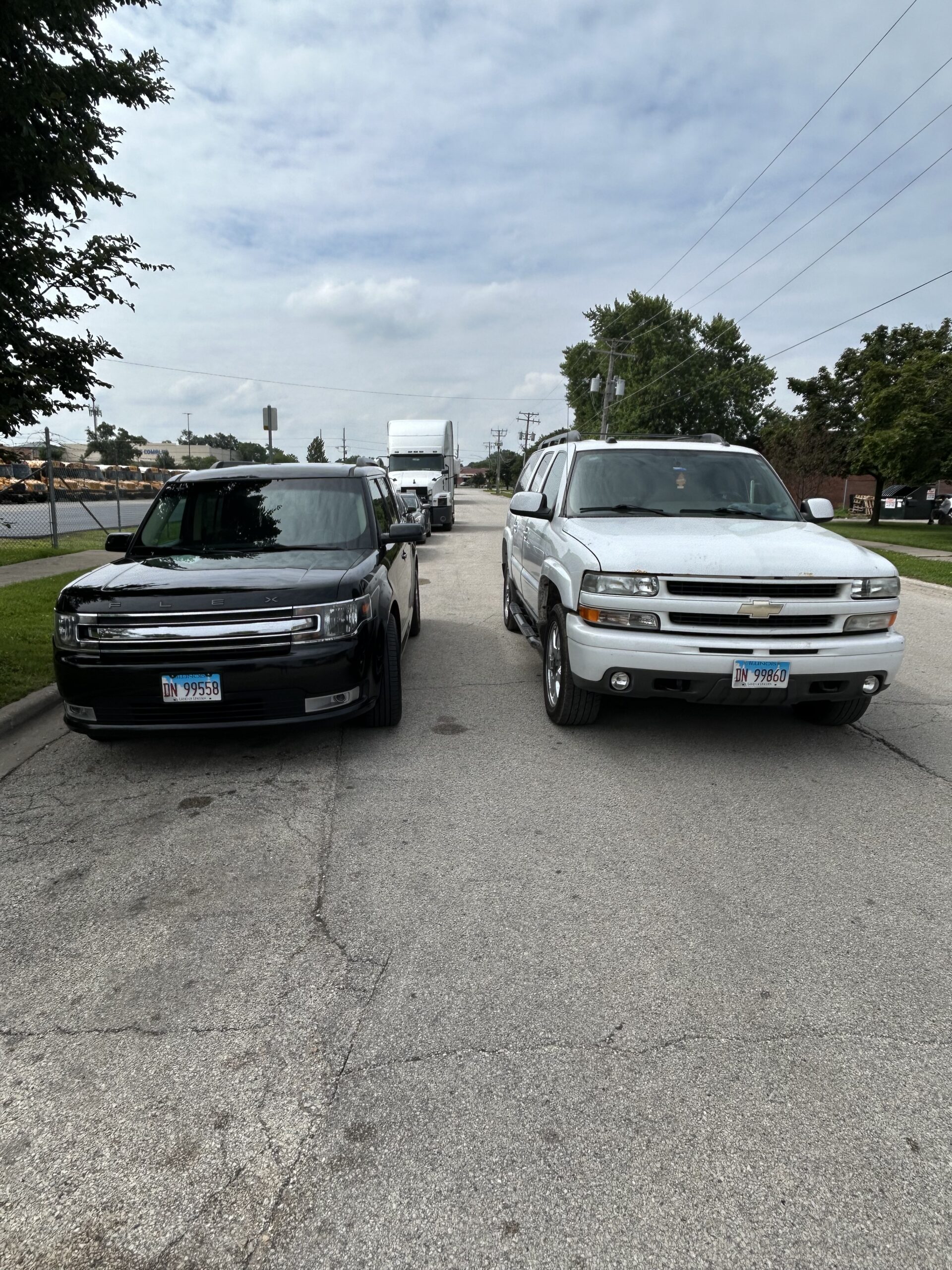
The most honest thing I own is a 2013 Ford Flex with 160,000 miles on the odometer and a dashboard cracked by years of Chicago winters. I share it with my family, and in the parking lot of Hinsdale Central, where sixteen-year-olds often arrive in new Broncos and Wranglers, it is an outlier. So is my dad’s 2005 Chevy Suburban.
For a car old enough to drink alcohol and another with enough miles to circle the earth over six times, these cars are a rolling testament to my family’s logic: use things fully, and save for what actually matters.
That philosophy was forged in 2022, after a mass shooting just steps from my school and another near my four-year-old sister’s preschool pickup line. My parents called me into their bedroom and told me we were leaving Chicago. I was angry; it felt like surrender. But beneath the frustration, it was also discipline, the same logic that keeps a 160,000-mile car running: protect what matters, and plan long term.
I’ve always been a quiet builder. Suburban comfort does not define me; I am a city kid shaped by leaving. I experienced the “middle-class exodus” not as a statistic, but as a forced pivot that tested my family’s values. My parents’ model of stewardship, living beneath our means to invest in what lasts, became my own.
So my academic “receipts” weren’t bought; they were built. While peers pursued curated programs, I used a Coursera subscription and a couple hundred hours of my own time to self-teach Artificial Intelligence through UPenn and Urban Planning through Johns Hopkins. I wasn’t chasing credentials. I was trying to understand the structural failures that push families out of cities like mine.
I applied those tools at Erie Neighborhood House. Using $400 of my own savings, supplemented by $1,100 in grassroots $50 contributions, I helped architect a bilingual digital tutoring platform to replace 200-page binders for families whose schedules don’t fit institutional assumptions. But building remotely wasn’t enough. On weekends, I drove that 160,000-mile Flex back into the city, conducting field research for my Chicago Rising project and working with the Chicago Metropolitan Agency for Planning to connect policy to lived reality.
Limited resources have become a competitive advantage. They demand precision, accountability, and ethics. I’ve carried that mindset into cold-pitching community banks for my AI for Main Street initiative, where I analyze real underwriting and compliance workflows to identify low-cost AI solutions that can expand access to credit without increasing default risk. Most recently, a semester invitation at Goldman Sachs showed me how finance can either widen or narrow the gap for small businesses and middle-class families. Watching analysts run models that penalized neighborhoods based on zip code rather than individual merit made the stakes feel personal. I realized I didn’t just want to understand these systems. I wanted to help redesign them.
I am looking for programs that combine the business skills needed to support small businesses with the urban planning knowledge to strengthen cities like Chicago. I want to move from analysis to execution, building systems that make cities viable for middle-class families again.
I am not a product of elite privilege. I am a product of disciplined stewardship, unconditional love, and a 2005 Suburban and 2013 Ford Flex that still run because we take care of them. That same mindset will shape how I show up in college: building thoughtfully, questioning systems that leave families behind, and staying grounded in the realities those systems affect.
Because in the end, the goal isn’t just to keep an old car running. It’s to help rebuild systems that were designed to last and make sure they still do.